Out of Character
RULES: OOC Guild RulesCONCEPT: An explaination of the concept, and its designORDER: Explaining the Order background structureVISION: The Azerothian vision sought
RULES
Behaviour:
Respect your fellow Players.
Avoid harrassing / spamming / trolling / witching hunting.Guild Chat:
Avoid delicate themes such as politics, religion, etcetera.Immersion:
Avoid OOC chat in IC channels while roleplay is ongoing in range. (It is okay to notify a group with a quick afk / brb)World:
OOC characters can traverse Azeroth in few minutes. IC the guild roleplay acts differently. Take in consideration distances, timings, environment for heat and cold.Mature Contents:
Due to Guild Themes the Guild is reserved for 18+ Players and Characters.
If the Roleplay touches delicate topics, use private channels or instances to conduct it.
CONCEPT
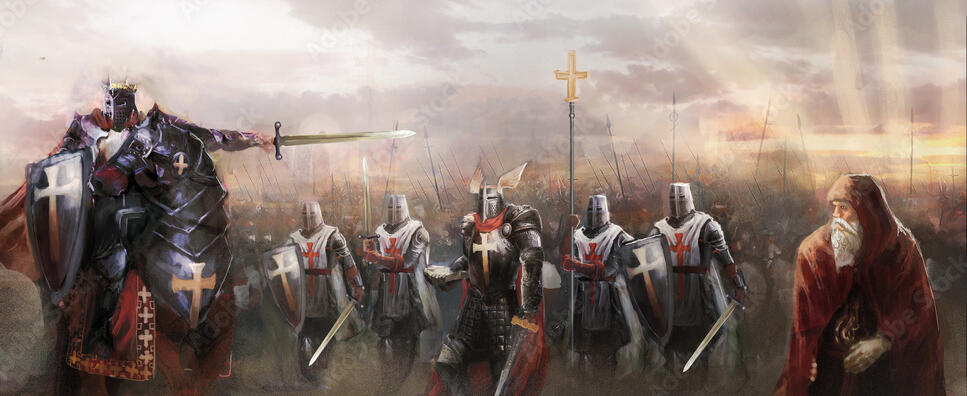
Throughout real history, every major religion developed its own internal variations — branches, sects, and orders.
Christianity alone encompasses Catholic, Protestant, Anglican, Orthodox, and many more traditions.From these traditions arose numerous Knightly Orders such as the Templars, Teutons, Hospitallers, and the Order of Saint John, as well as influential Monastic Orders like the Franciscans, Benedictines, and Cistercians.From this heritage emerges the inspiration for a completely original Order: the Nameless Order.
It provides the freedom to create rites, liturgies, and spiritual customs with a depth and nuance that Blizzard-Activision’s setting cannot explore due to its commercial constraints. This is a space where the Holy Light can be approached with the same richness and seriousness that real-world traditions hold.The Guild welcomes characters who already believe in the Holy Light — or who seek, or are compelled, to walk that path. Progress within the Guild follows three broad stages:Fellowship — where one first steps into the guild and begins their journey.Instruction — where the character is taught the doctrine, discipline, and culture of the Order.Ordination — the final stage, when both player and character have embraced the guild’s way and are fully initiated into the Order.The Nameless Order is a faith-driven, militant body designed to blend immersive fantasy roleplay with disciplined, mature storytelling. Its guiding motif is simple yet profound: purity of faith meets human imperfection — a deliberate friction that fuels drama, character growth, and emotional authenticity.
Sacred ORDER Concept
In Azeroth, every faith-based military Order — whether the Scarlet Crusade, the Argent Crusade, or the Knights of the Silver Hand — is more than a spiritual fellowship. These Orders always express themselves through three converging dimensions:Territoriality — the sacred ground they defend or seek to reclaim.Political Expression — their ideology and influence upon kingdoms, peoples, and institutions.Theological Mission — the spiritual purpose that justifies their existence and gives form to their crusade.This mirrors the historical reality of our own world.
For example, the Templars began as guardians of the Holy Temple in Jerusalem and protectors of pilgrims travelling there. After the fall of Acre, they transformed into a major continental power — until their wealth and influence grew so vast that a king, indebted to them, branded them heretics to eliminate the debt and seize their assets.The Nameless Order follows the same triad of motivations in its narratives: a land to safeguard or restore, a political ideal to uphold, and a divine mission that guides its hand. This gives the Order grounding, depth, and a believable place within the world of Azeroth.
Sacred ORDER Organization
Why Iehudiel Is the Guild Leader — but Not the Grand Master of the OrderThis is an intentional design choice.
Within the lore, the Nameless Order is a larger institution, most of which exists as an NPC structure. This mirrors the way many military or noble-themed guilds operate: an army guild may answer to a General or High Command, and a retinue may answer to a noble house — even if those figures are not played directly. It respects the idea that the world is alive, with NPC powers acting, reacting, and issuing orders beyond what players control.How This Structure Benefits the Guild:The Order can assign missions to the Guild.
These come from the unseen Grand Master or the broader hierarchy of NPC superiors.Iehudiel is the Guild Leader, but not the head of the entire Order.
In-character, he is simply one of the ordained members entrusted with leading this specific initiative.
Out of character, he remains guild master for stability — but specific narratives could even put another ordained character temporarily as lead.Ordained characters may rise or fall.
Players who have reached ordination may gain or lose standing based on roleplay.
They may become Iehudiel’s left or right hand — officer equivalents — by earning the favor of NPC superiors.Players may request to roll an already-ordained character.
With trust and approval, a player can introduce a character who is already part of the Order’s upper ranks, sent to aid or evaluate Iehudiel’s initiative.Why This MattersThis structure creates a rich framework for creativity.
It enables political play, rivalry, advancement, and subtle power struggles — all without breaking immersion or reducing the Order to a single player-run hierarchy. The NPC authority of the Order acts as a story engine, generating missions, pressures, and opportunities for characters who thrive on deep, dynamic roleplay.
VISION of AZEROTH
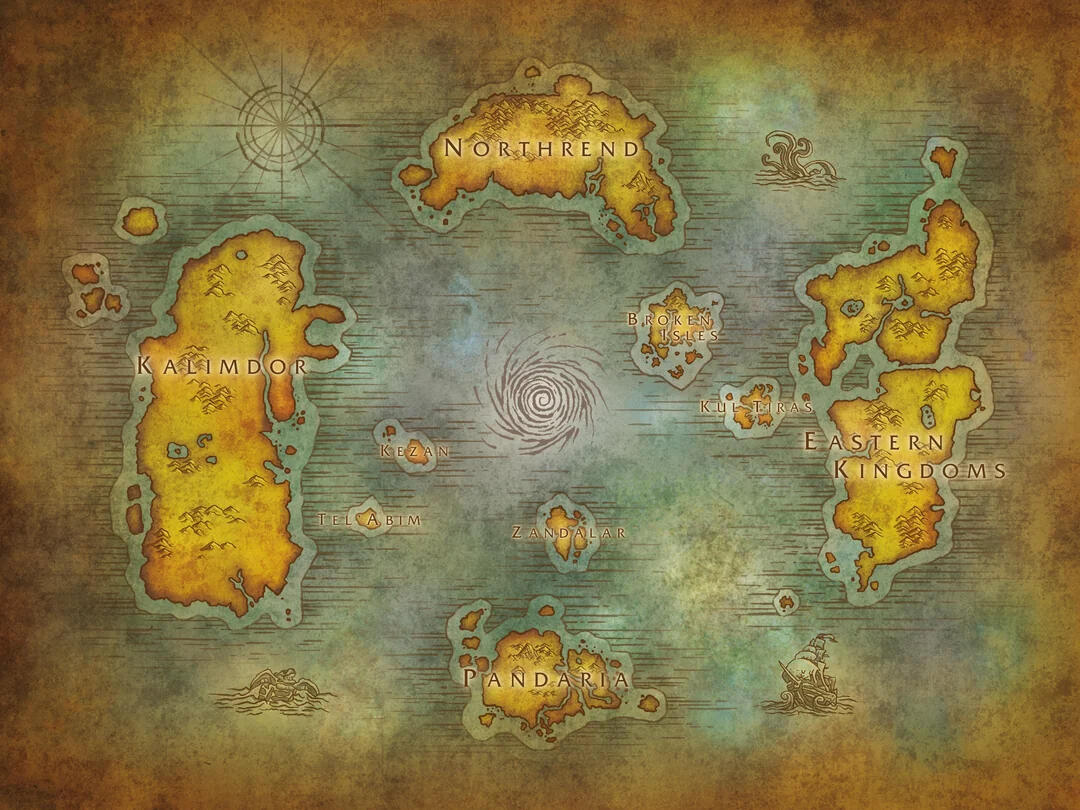
The official lore of World of Warcraft has taken many twists and turns over the years. The greatest issue is that it no longer follows a consistent internal logic. Even before players introduce their own headcanon, anyone can see the incoherence of a world where a simple Stormwind Footman and the Vindicaar — a Light-powered spaceship — coexist side by side. In Undercity we find cards, drones, and machine guns; in Elwynn, peasants still plough fields with wooden tools.By comparison, real-world history shows a clear pattern: as technology advances, so do weapons, tools, and daily life. Azeroth has no such clear progression.The style of roleplay sought for this project instead follows a medieval-fantasy interpretation. Taverns in the Eastern Kingdoms do not have refrigerators; their rooms do not have showers or running water. Medicine is not clinical or scientific — it is either rudimentary or magical. Characters should not speak of genes, viruses, or modern medical theory.The atmosphere encouraged is one of superstition, religious introspection, grounded realism, and low-to-moderate fantasy:
magic exists, but technology does not eclipse the sword, the prayer, or the torch.Good inspiration for players are the sagas of:
Game of Thrones (Books / TV serie)
Knightfall (TV serie)
Lord of the Rings (Books / Movies)
Arthurian Saga (Books / Movie)